
Past–Present–Future in Change Communication
Introduction
The Past–Present–Future structure is a classic storytelling and communication technique that works especially well in change communication. It creates a logical, human-friendly flow that helps people understand where we’ve come from, where we are now, and where we’re going.
1. Past — Where We’ve Come From
- Purpose: Acknowledge history, effort and the journey so far.
- Why it matters:
- Shows respect for what people have already done.
- Validates existing identity and achievements (avoids “everything you did was wrong”).
- Provides context: change is part of a longer story, not a sudden disruption.
- How to communicate:
- Highlight successes and lessons learned.
- Explain why past ways worked then but may not work now.
- Recognise contributions of teams/individuals.
- An Example: “For the past 10 years, our teams have delivered excellent service using 5 different systems. That got us here, but it’s becoming harder to manage.”
2. Present — Where We Are Now
- Purpose: Describe the current situation and the challenges or opportunities.
- Why it matters:
- Creates urgency and relevance (“why now?”).
- Helps people see reality clearly, not through assumptions.
- Embodies both past strengths and current gaps.
- How to communicate:
- Share data, insights, or pain points that show the case for change.
- Use stories or testimonials from staff/customers to illustrate current frustrations or opportunities.
- Keep it honest: acknowledge both strengths and weaknesses.
- An example: “Right now, staff spend up to 3 hours a week switching between systems, which slows service and frustrates customers.”
3. Future — Where We’re Going
- Purpose: Paint a picture of the desired future and what success looks like.
- Why it matters:
- Inspires and motivates (people are drawn to a good vision.)
- Reduces fear of the unknown by showing what the change will deliver.
- Provides direction and shared purpose.
- How to communicate:
- Share a vivid vision (what’s possible).
- Connect to organisational strategy or personal benefits.
- Be concrete about what will improve.
- An example: “In the future, one integrated platform will mean faster service, less admin for you, and more time with customers.”
Why This Structure Works
- Mirrors how people make sense of change: acknowledgement to understanding to imagining.
- Builds emotional connection (respecting the past), cognitive clarity (current reality) and motivational energy (future vision).
- Prevents defensiveness as you are not dismissing the past, you’re building on it.
An Example in Practice (condensed message)
Past: “We’ve built strong customer relationships using multiple systems and they have served us well for years.”
Present: “But today, those systems are slowing us down and making service harder.”
Future: “With one unified platform, we’ll deliver faster, smarter service; freeing up your time for what really matters.”
This technique can be used in town halls, leader talking points, slide decks, emails, or storytelling — anywhere you need to bring people on a change journey.
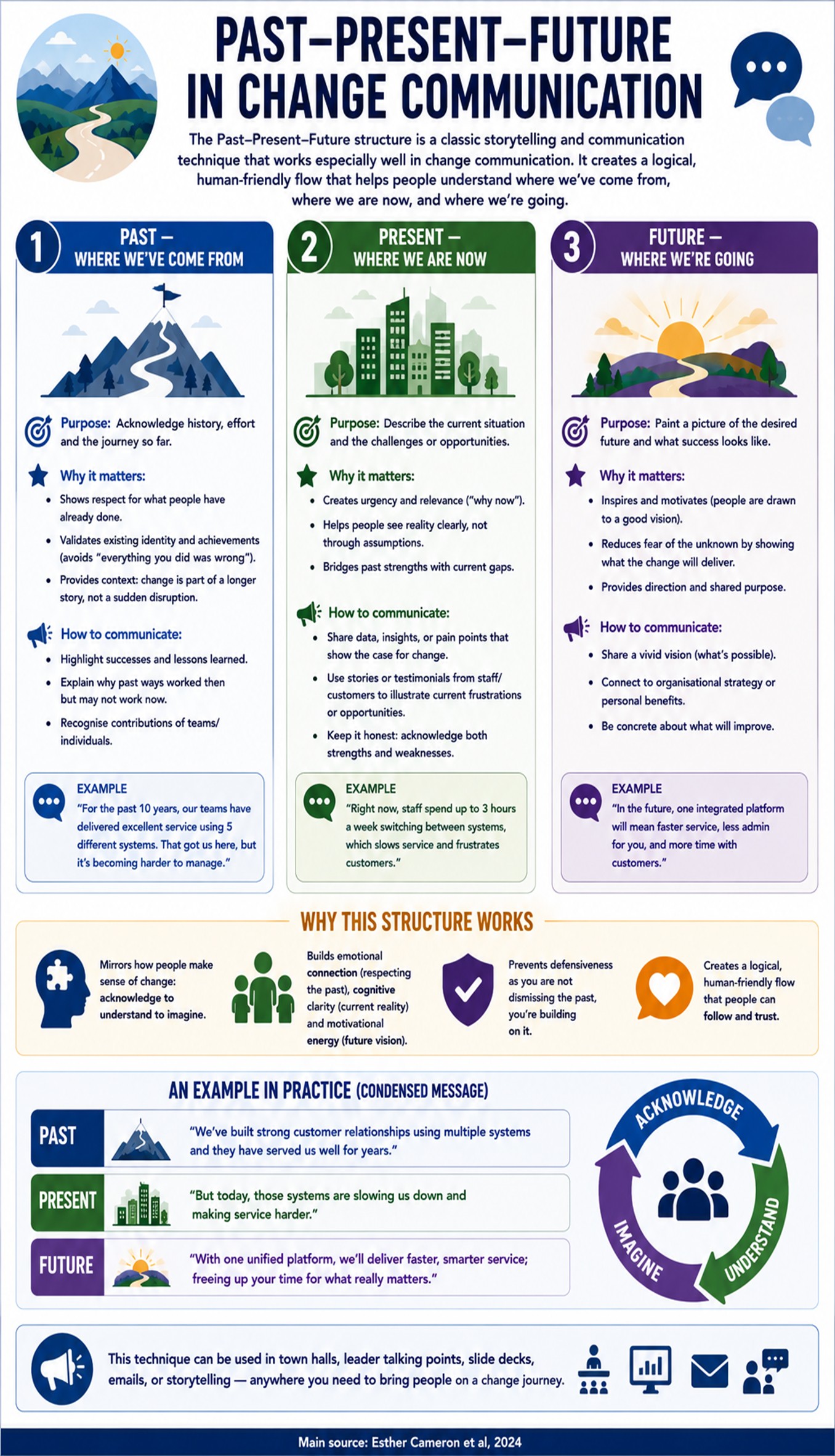
(main source: Esther Cameron et al, 2024)