
Manfluencers
Introduction
The term manfluencer is used to describe a social-media influencer (or self-styled guru) who targets a male audience, giving advice around masculinity, relationships, self-improvement, money, lifestyle, etc., but does so with a strong gendered (and often anti-feminist or misogynistic) slant. For example:
- A recent research paper describes manfluencers as “male influencers who espouse misogynistic content and beliefs” and who try to persuade men “to view women and feminism as a threat to their masculinity and status as men”.
- Another article notes that these influencers “package their messages in slick, digestible videos,” blending self-improvement advice with “rhetoric that frames women and feminism as the root of male disempowerment.”
- They often operate on high-reach platforms (YouTube, TikTok, Instagram) and make use of the follower-economy and algorithmic amplification.
In short: a manfluencer is not simply a lifestyle influencer for men. The key distinguishing feature is the gendered framing and, frequently, the adversarial stance towards women/feminism and the focus on male status, threat, and identity.
How manfluencers link to the manosphere
The manosphere is a broader ecosystem of online spaces (forums, blogs, videos) with shared themes: masculinity, opposition to feminism, perceived male victimhood, and often misogyny.
Manfluencers operate within, draw from, amplify and help professionalise parts of that ecosystem. Here’s how:
1. Ideological alignment
- Manfluencers often adopt manosphere-language (e.g., “feminism is hurting men”, “men are losing their traditional roles”, “women/girls are threats to male status”). For example, a study found an association between following manfluencers and higher levels of dehumanising attitudes toward women.
- The manosphere frames men as disadvantaged by feminism or “gynocentric” cultures.
2. Recruitment and Reach
- Manfluencers reach young men who may be searching for identity, belonging, purpose, or self-improvement, and act as gatekeepers or conduits into the more extreme elements of the manosphere. For example, one article noted that the loose digital ecosystem of influencers and communities “stretches from self-help gurus and dating coaches to anti-feminist forums”.
- Reports suggest that algorithms expose young men to this content early (e.g., soon after joining social media) and that manfluencer content can escalate toward more extreme manosphere content.
3. Professionalisation & Monetisation
- Whereas earlier manosphere forums might have been free-form discussion boards, manfluencers operate as personal brands: video channels, e-courses, merchandise, membership groups, etc. This commercial dimension helps amplify reach and sustain content production.
- The slick packaging of self-help + male empowerment + gender threat makes the message more palatable than raw misogynistic rant-forums — enabling mainstream spread.
4. Pathway to Radicalisation
- Academic research indicates that engagement with the manosphere (via forums or influencers) correlates with increased misogynistic attitudes and potential for radicalisation.
- Since manfluencers act as accessible entry points, they can normalise hostile gendered narratives under the guise of self-help, thereby lowering the barrier for entry into more extreme manosphere subspaces.
Implications to consider
- For young men: Following manfluencers might start with benign motivations (self-improvement, life advice) but can shift into adopting misogynistic worldviews or feeling victimised and distrustful of women/feminism.
- For educators, parents & schools: Awareness is key: young men may be exposed to these narratives in subtle ways. The content may appear like “mentoring” or “life coaching” but carry underlying adversarial gender logic.
- For online regulation/education: Because manfluencers straddle the space between lifestyle content and radical ideology, moderating or responding to the content becomes tricky. The rhetorical framing often emphasises legitimate issues (e.g., male mental-health, identity) but ties them to gendered hostility.
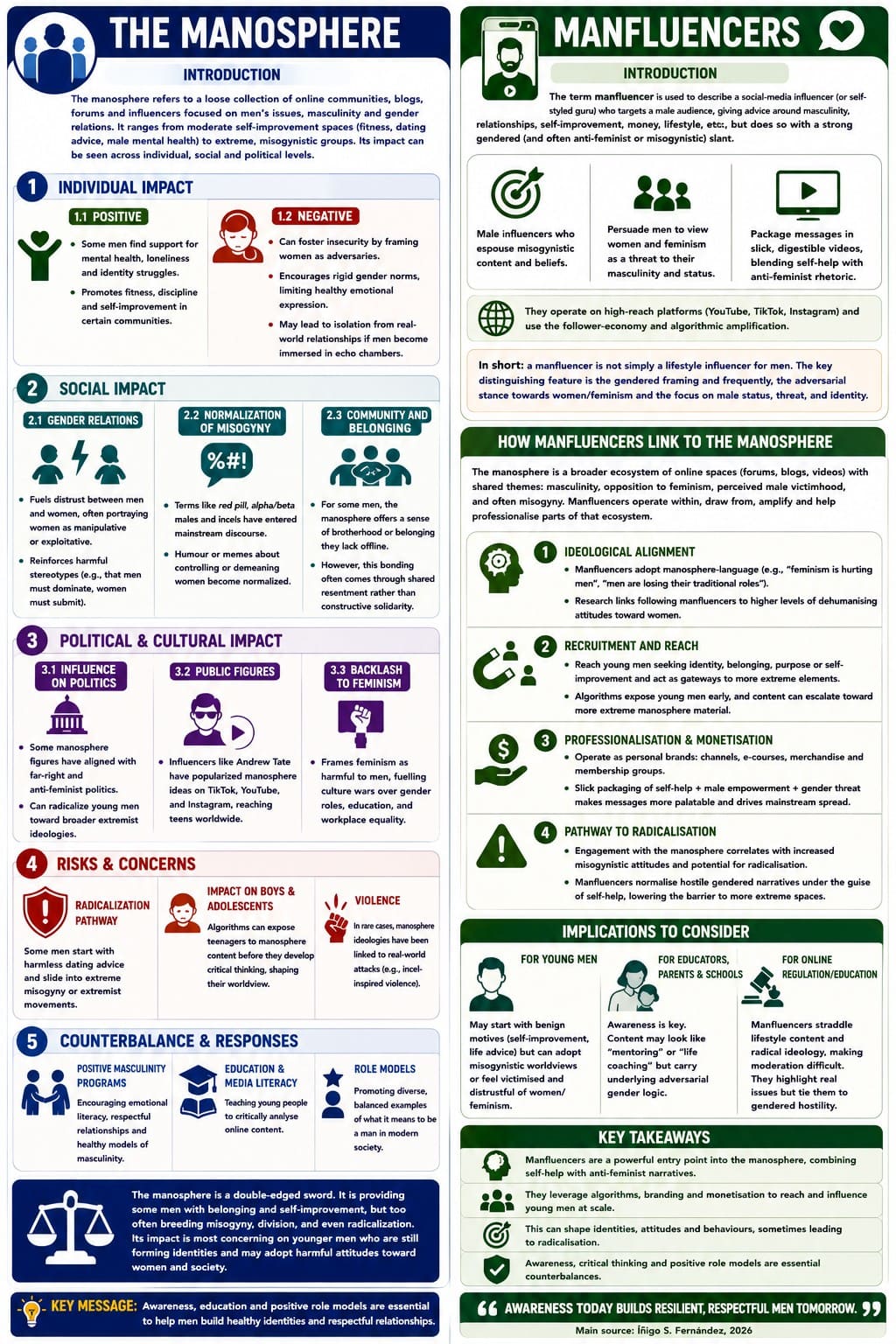
(main source: Íñigo S. Fernández, 2026)