
Compare Techniques (“foot-in-the-door” with “door-in-the-face”)
Introduction
Door-in-the-Face vs. Foot-in-the-Door are often taught together because they’re opposite but complementary persuasion techniques. Both can be applied in change management, depending on the situation.
Door-in-the-Face Technique
Definition: Start with a large request you expect will be rejected, then follow up with a smaller, reasonable request (your real goal).
Psychology: Norm of reciprocity — people feel obliged to say yes after you’ve “conceded.”
A Change Example:
- Big ask: “We want everyone to completely switch to the new system by next month.”
- Real ask: “Okay, then let’s start with a 3-month pilot in two departments.”
- Outcome: Pilot feels reasonable, acceptance increases.
Best for:
- Overcoming initial resistance.
- Negotiating with leadership or unions.
- Securing resources or phased adoption.
2. Foot-in-the-Door Technique
Definition: Start with a small, easy request, then gradually build to a larger request.
Psychology: Commitment & consistency — once people say yes to something small, they want to stay consistent with their behaviour.
Change Example:
- Small ask: “Can you test this new feature for a week?”
- Bigger ask: “Now that you’ve tested it, can your team adopt the whole platform?”
- Outcome: Step-by-step buy-in leads to full change adoption.
Best for:
- Building momentum slowly.
- Early change champions.
- Encouraging behaviour change over time.
Side-by-Side Summary
| Technique | Strategy | Psychology | Best Use Case in Change |
|---|---|---|---|
| Door-in-the-Face | Start big & scale down | Reciprocity (they feel you compromised) | Overcoming resistance; negotiating; gaining initial acceptance |
| Foot-in-the-Door | Start small & scale up | Commitment & consistency | Building momentum; gradual adoption; growing change champions |
Key takeaways:
- Door-in-the-Face works when people are resistant; they are more likely to accept a smaller ask after rejecting a big one.
- Foot-in-the-Door works when you want gradual buy-in; people are more likely to commit to bigger changes once they’ve agreed to smaller ones
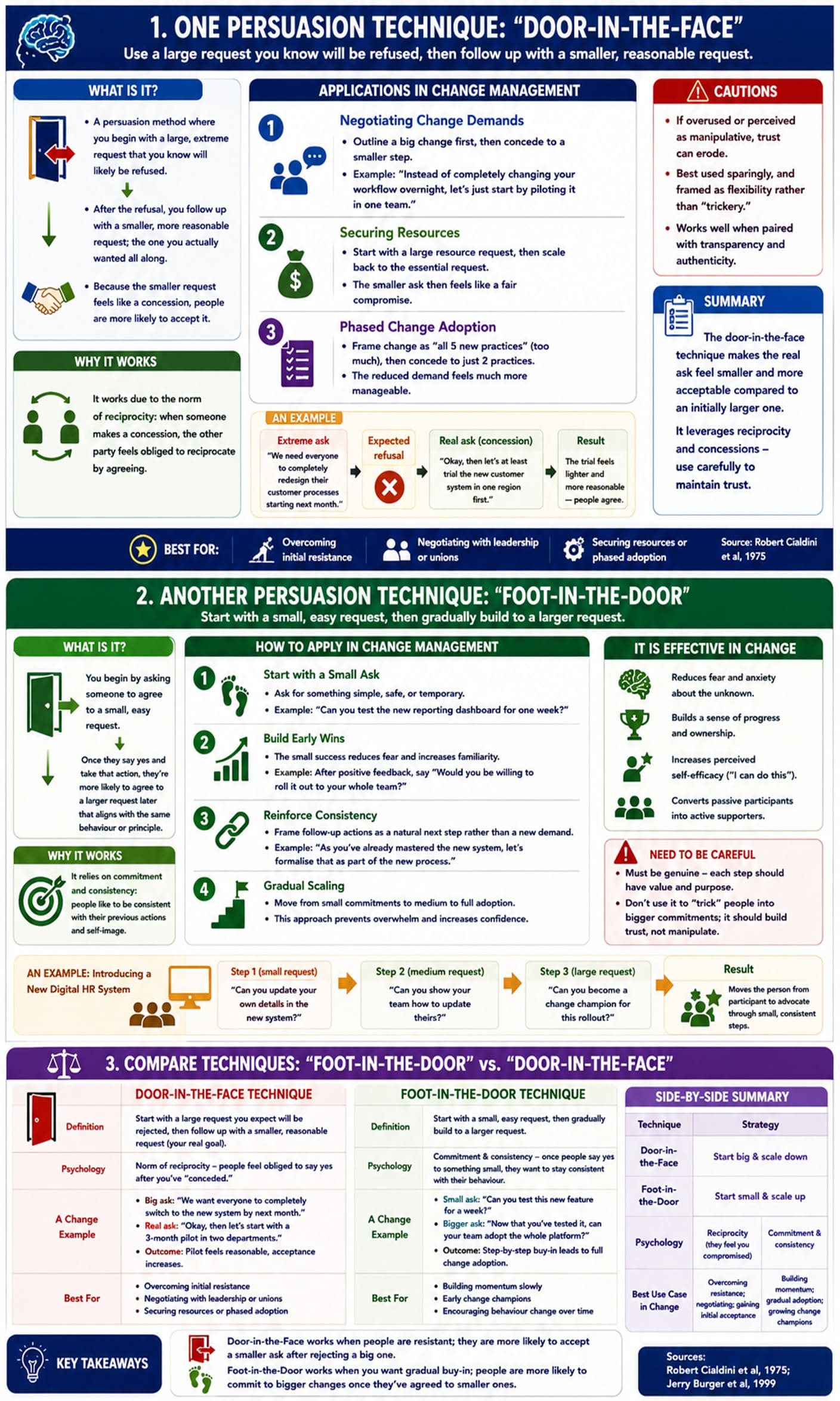
(main sources: Robert Cialdini et al, 1975; Jerry Burger et al, 1999)