
Change Management Language Cheat Sheet
Introduction
This sheet can be used when drafting speeches, emails, FAQs, or town halls. It is organised by common communication needs in change management.
1. Announcing the Change
- “Here’s why this change is important for our future — and for you.”
- “We’ve listened to feedback and are shaping the way forward together.”
- “This change helps us simplify how we work and focus on what matters most.”
Avoid: “This is what management decided, so we must do it.”
2. Explaining the Why
- “We’re building on our strengths while addressing what’s holding us back.”
- “This will make your day-to-day work easier by [specific example].”
- “By doing this, we’ll stay competitive and create more opportunities.”
Avoid: “We have to keep up or be left behind.”
3. Acknowledging Concerns
- “It’s natural to feel uncertain — let’s talk through your questions.”
- “We know this won’t be easy, and we’ll support you every step.”
- “Your feedback is important — it helps us get this right.”
Avoid: “Don’t worry, it won’t be a big deal.”
4. Describing the Impact
- “Here’s what will change for you, and here’s what will stay the same.”
- “This is how your role will evolve, and we’ll provide training.”
- “Some things will feel different, but you’ll also see benefits quickly.”
Avoid: “This won’t affect you much.”
5. Creating Engagement
- “You’ll play a key role in shaping how this works in practice.”
- “We’d like your input on what support will help most.”
- “Your involvement makes this change stronger.”
Avoid: “This is the only way forward — no discussion.”
6. Framing Resistance
- “Feedback shows us where we need to do more explaining and support.”
- “Concerns are part of the process — they help us refine the approach.”
- “Let’s explore what’s behind the hesitation and address it together.”
Avoid: “Resistance is a problem we need to eliminate.”
7. Building Confidence
- “Change takes effort, but we have the skills and strengths to succeed.”
- “We’ve done this before, and we can build on those successes.”
- “This will challenge us, but we’ll come through stronger.”
Avoid: “This will be easy.”
8. Reinforcing Progress
- “Here’s what we’ve achieved so far — and here’s what’s next.”
- “We’re learning as we go, and your feedback is helping us improve.”
- “Thank you for the progress you’ve already made — it matters.”
Avoid: “We’re still not there yet.”
NB When in doubt, run your draft messages through this filter:
- Is it inclusive (we, us, together)?
- Is it clear and specific (not vague)?
- Is it empathetic (acknowledges feelings)?
- Is it empowering (gives agency)?
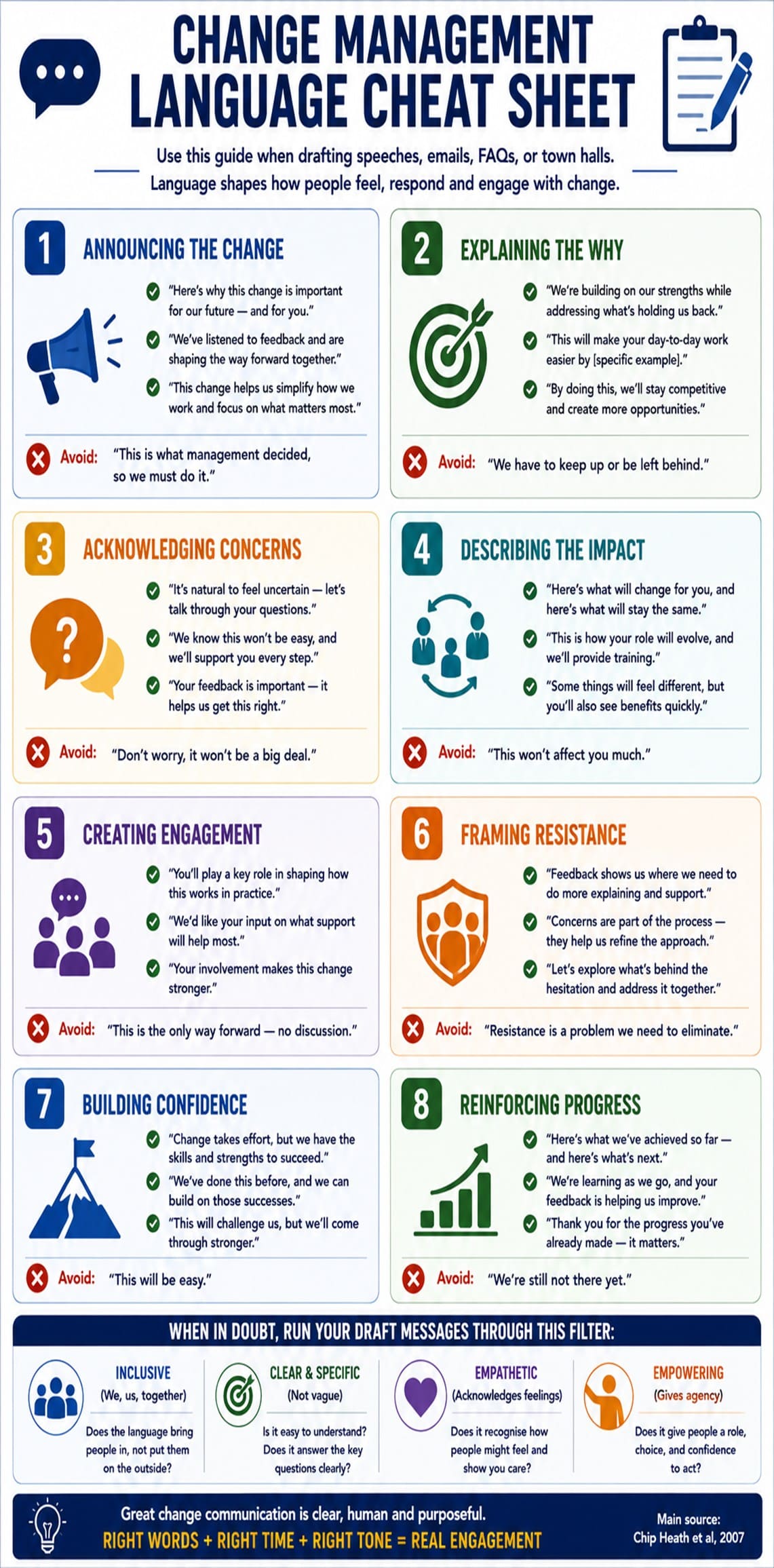
(main source: Chip Heath et al, 2007)