
Components of Change Communication Strategy
Introduction
A Change Communication Strategy is the structured plan that guides how, when and what you communicate during a change initiative.
It ensures people are informed, involved, and inspired, not just “told”.
Core components
1. Purpose & Objectives
Clarify why you are communicating.
- Define what success looks like: awareness, understanding, engagement or behaviour change?
- Link communication goals to the overall change outcomes.
- An example: “To build understanding and commitment for the new digital platform across all teams.”
2. Audience Analysis
Identify who needs to hear what; tailor it accordingly.
- Segment by role, influence and impact (e.g., leaders, managers, frontline, customers, etc).
- Understand their concerns, motivations and communication preferences.
- An example: Executives want strategy and ROI; frontline staff want “what’s changing for me?”
3. Key Messages
Craft the core narrative that ties all communication together.
- Why the change is happening (context).
- What is changing (specifics).
- How it affects people (impact).
- What’s in it for me (WIIFM).
- Keep it consistent, credible and emotionally engaging.
- Use headline messaging: short, clear, memorable statements.
4. Phased Approach (Timing & Sequence)
Align messages with the phases of change:
- Awareness: Why the change?
- Understanding: What it means for us?
- Commitment: How we will make it happen?
- Sustainment: Reinforcing success and new behaviours.
Each phase requires different tone, content and frequency.
5. Channels & Methods
Choose how to reach your audiences most effectively.
- Formal channels: Emails, newsletters, briefings, intranet updates, etc.
- Interactive channels: Workshops, town halls, Q&As, Yammer, Slack, etc.
- Leader-led channels: Team meetings, one-on-ones, etc
- Use hybrid communication to balance digital and face-to-face methods (mitigate proximity bias).
6. Roles & Responsibilities
Define who delivers the messages.
- Sponsors provide vision and authority.
- Managers localise the message for their teams.
- Change champions reinforce and model new behaviours.
- Comms team supports message consistency and branding.
7. Schedule & Frequency
Plan timing, cadence and flow.
- Align with key milestones (before, during, after change events).
- Build rhythm with consistent communication builds trust.
- Use a communication calendar to manage timing and avoid overload.
8. Feedback & Engagement Mechanisms
Communication is 2-way, not just broadcast.
- Gather feedback through surveys, Q&As, pulse checks, open forums, etc.
- Listen actively and adjust messaging.
- Show that feedback is used (“you said, we did it”).
9. Measurement & Evaluation
Track whether communication is working.
- Metrics: engagement rates, participation levels, understanding, sentiment analysis, adoption data, etc.
- Methods: pulse surveys, focus groups, change readiness assessments, etc.
- Adjust approach based on data.
10. Risk & Mitigation
Anticipate communication-related risks.
- Misinformation, rumours, resistance, message fatigue, etc.
- Plan proactive counter-messaging and clear escalation paths.
- Example: “If rumours spread about layoffs, issue a rapid clarification statement within 24 hours.”
11. Tone, Style & Branding
Ensure all messaging reflects organisational values and culture.
- Tone: transparent, empathetic, confident, etc.
- Use plain language, not corporate jargon.
- Maintain visual consistency (logos, templates, style).
12. Review & Continuous Improvement
Communication isn’t static, it evolves.
- Review feedback and effectiveness regularly.
- Adapt tone and content as change progresses.
- Keep reinforcing the vision after go-live to prevent regression.
Summary:
A strong change communication strategy answers:
Why (purpose), Who (audience), What (message), How (channels), When (timing), and How well (measurement).
It blends clarity, consistency and connection - the 3 Cs that drive trust and engagement.
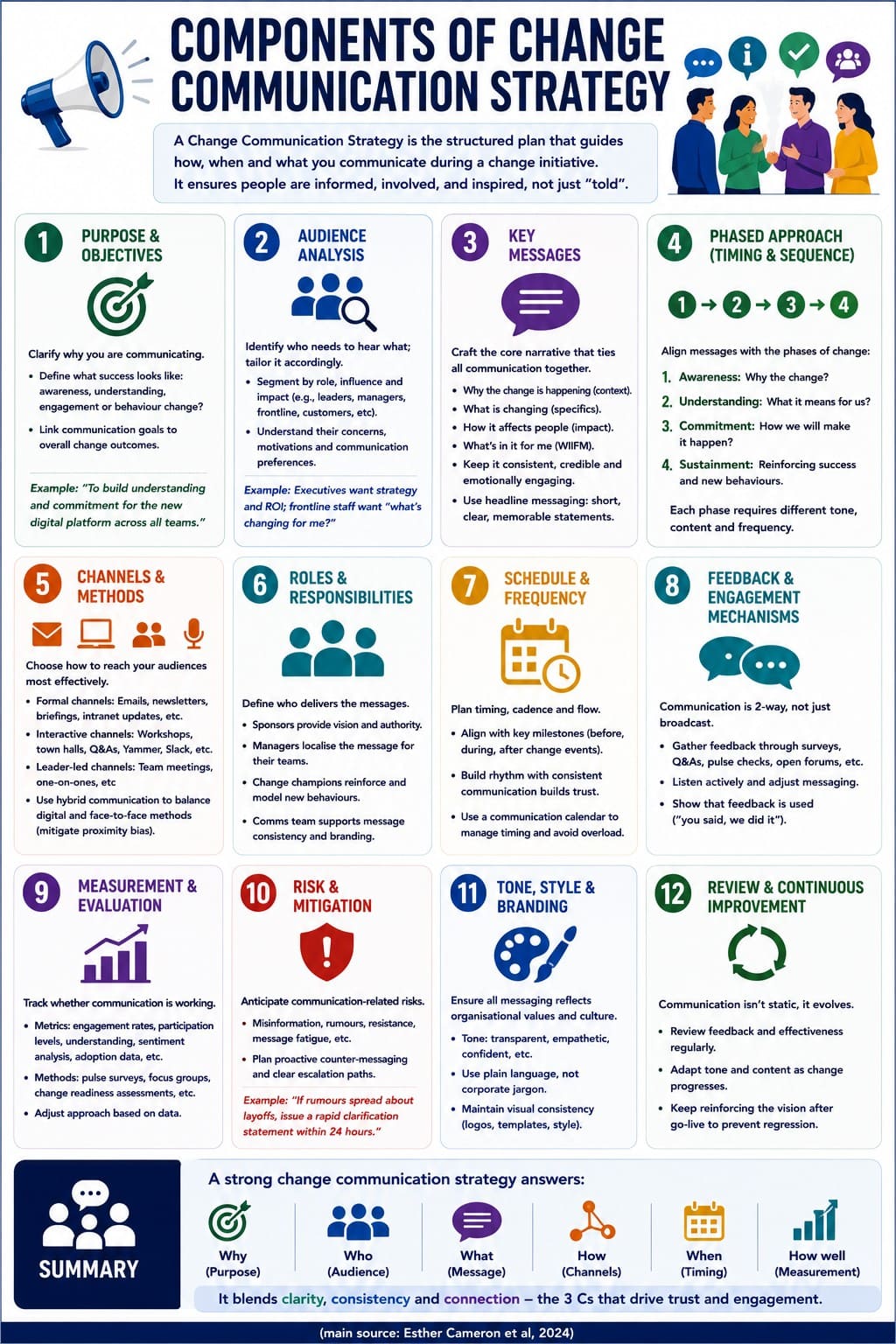
(main source: Esther Cameron et al, 2024)