
Relationship (psychological contract)
Introduction
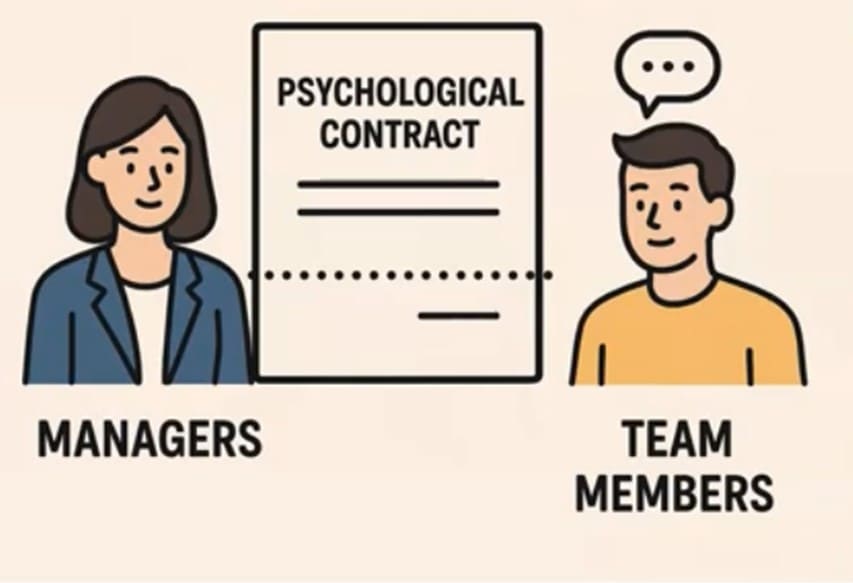
The psychological contract is the unwritten set of expectations, beliefs and assumptions that employees and employers hold about their relationship.
It is not a formal contract. It lives in how people interpret promises, fairness, recognition, job security, development, effort and support. When employees feel that these expectations are met, trust rises and they give extra effort because they feel valued. When they feel that expectations are broken or ignored, trust collapses, motivation drops and resistance grows.
(source: Tim Baker, 2025b)
Key components of the psychological contract
• What the employee believes they owe the organisation (performance, loyalty, flexibility, skills)
• What the employee believes the organisation owes them (pay, support, development, respect, stability, inclusion)
• How both sides treat each other day-to-day, which signals whether promises are honoured
Its application to change management
Change forces people to reassess the psychological contract.
A restructure, new technology or new strategy changes what is required from employees.
If leaders do not clearly communicate the new deal, people fill the gaps with fear and mistrust.
Here is how it shapes change outcomes:
- Trust and resistance
When employees feel blindsided or treated unfairly, they interpret it as a contract breach. They hold back effort, show cynicism and resist change. Change leaders must protect trust through honesty and early communication. - Fairness and voice
People expect fairness in decisions that affect them. They want to be heard. In change, involving employees in continuing design signals respect and maintains the contract. - Reciprocity
If the organisation asks for more effort or flexibility during change, employees expect something in return: support, training, recognition or clarity. Leaders must make the exchange explicit. - Identity and meaning
Work is part of people’s identity. Change can feel like a personal loss. Supporting purpose, development and belonging helps maintain the psychological contract. - Continuity versus disruption
Even when parts of the deal must change, preserving elements like dignity, feedback and career pathways reduces the feeling of violation.
What effective change leaders do
• State clearly what is changing in expectations and what is staying the same
• Involve people early to co-create the new contract
• Deliver on promises and avoid over-promising
• Treat people with fairness and empathy, especially in tough decisions
• Provide support that matches what is asked of employees
Summary
Change succeeds when people feel the organisation still keeps its side of the bargain. If leaders ignore the psychological contract, resistance is not unreasonable behaviour. It is a rational response to loss of trust.
(main source: Tim Baker, 2025b)