
Application of Decatastrophizing in Change Management
During Change Announcements
Use decatastrophizing to:
- Slow emotional escalation
- Clarify what is known, unknown and unlikely
- Prevent rumour spirals.
Leader language:
“Let’s separate worst-case fears from what we actually know.”
In Resistance Conversations
Use it to:
- Identified hidden fears beneath resistance
- Reduce defensiveness
- Shift from emotion to collaborative problem-solving
Facilitator question:
“What’s the worst thing you think might happen if this goes ahead?”
In Leadership Decision-Making
Use it to:
- Prevent fear-driven avoidance
- Test whether leaders are over-weighting downside risk
- Balance risk with opportunity.
Board-level question:
“Are we managing real risk, or catastrophic imagination?”
In Change Fatigue
Use it to:
- Counter “everything is falling apart” narratives
- Restore proportionate thinking
- Rebuild emotional energy.
In High-Risk Transformations
Use it to:
- Build credible contingency plans
- Increase confidence through preparedness
- Reduce anxiety without denying risk.
Decatastrophizing at the System Level
Organisations typically catastrophize when:
- Transparency is low
- Trust is weak
- Past change failures are unresolved
- Leaders communicate in absolutes.
Decatastrophizing systems involves:
- Clear decision logic
- Visible risk management
- Honest acknowledgement of trade-offs
- Demonstrated recovery capability.
Common Mistakes in Applying Decatastrophizing
- Rushing people through fear
- Arguing with emotion by using logic alone
- Minimising legitimate risks
- Treating all fears as irrational.
Decatastrophizing is not dismissing fear; rather it is disciplining it.
Simple Decatastrophizing Script for Change Leaders
“Let’s pause.
What’s the worst-case scenario people are worried about?
How likely is that, realistically?
If it did happen, what options would we have?
And what’s the most likely outcome based on what we know today?”
Summary
Change derails when imagined catastrophe overwhelms real risk; decatastrophizing restores proportion, agency, and forward motion.
Change leadership requires respecting fear, without allowing imagined catastrophe to overwhelm or dominating the organisation.
Be fear-aware and risk-disciplined
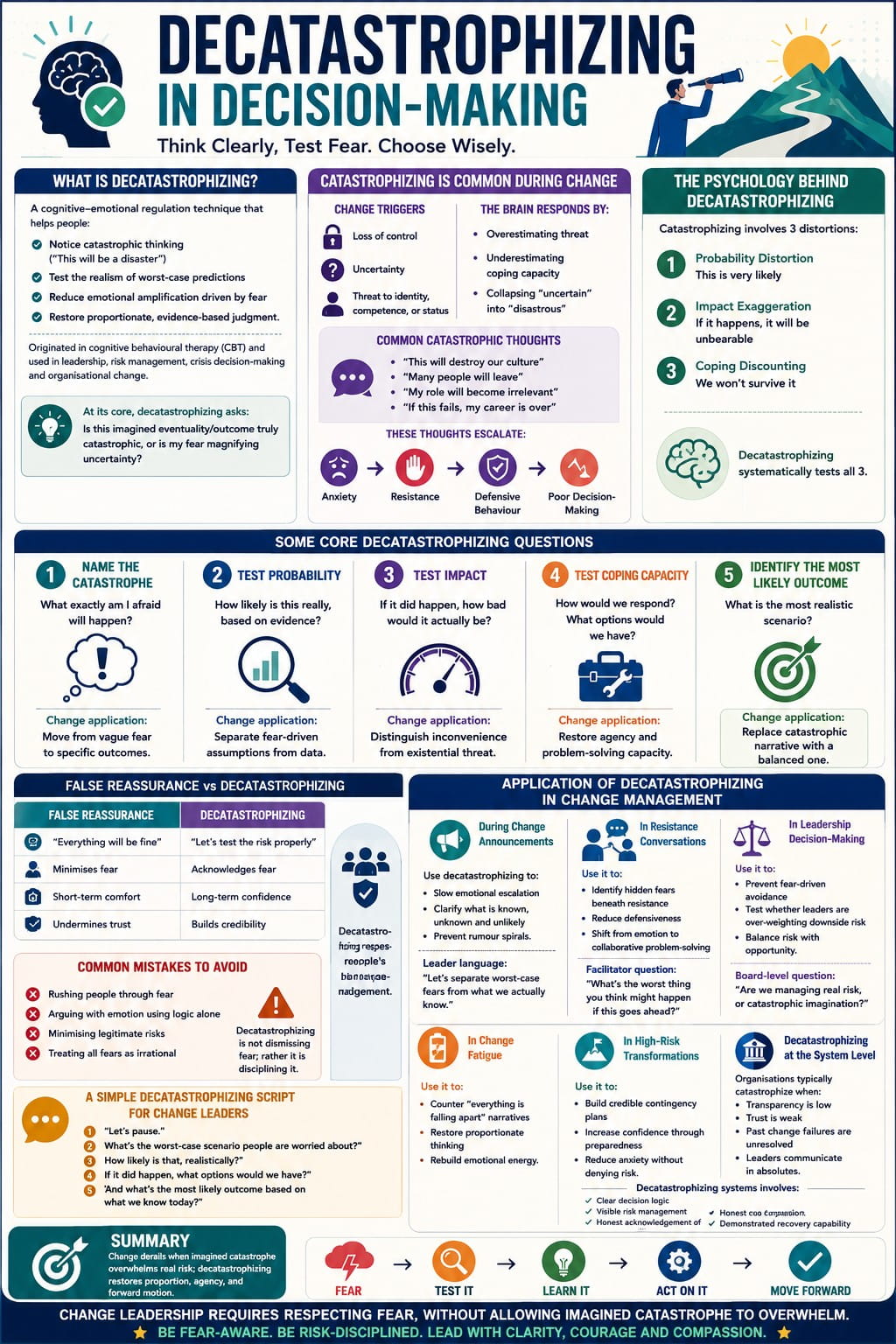
(main source: Jeremy Sutton, 2020)