
Permafrost Layer (part of communications cascade)
Introduction
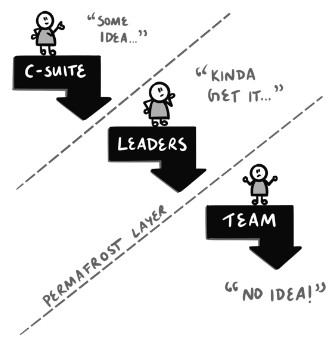
Permafrost Layer is a concept from change management and communications (not geology), describing the resistant or frozen layer of employees or stakeholders who are hardest to engage during change.
The Permafrost Layer refers to the segment of people in an organization who:
- Are sceptical or resistant to change.
- May ignore or block communication.
- Often feel disengaged, threatened, or undervalued.
Typically, this is 10–20% of the workforce, though it varies.
These individuals can slow down adoption if their resistance is not addressed carefully.
The permafrost layer breaks the communication cascade.
Why It Exists
- Fear of losing control, status, or skills.
- Past negative experiences with change.
- Lack of trust in leadership or the process.
- Misalignment between personal values and organizational goals.
Handling the Permafrost Layer
1. Identify the Layer
- Use surveys, engagement metrics, observation and manager insights to spot resistant groups.
- Look for patterns in disengagement, negative feedback or passive resistance.
2. Listen and Understand
- Engage in active listening to understand concerns.
- Hold focus groups, one-on-one conversations, or town halls for dialogue.
- Validate their feelings; do not dismiss or criticize.
3. Build Trust
- Apply the 3Ts of trust:
- Timely: Communicate early and often.
- Thoughtful: Consider their perspective.
- Transparent: Be honest about challenges and limitations.
4. Tailor Communication
- Provide specific, relevant messages addressing their concerns.
- Use examples that resonate with their role or experience.
- Highlight personal benefits and long-term value.
5. Leverage Influencers
- Identify respected peers or informal leaders within the group.
- Equip them to model behaviours, share positive experiences and influence their colleagues.
6. Encourage Participation
- Involve them in co-design or problem-solving activities.
- Provide opportunities to contribute ideas and feel ownership.
7. Be Patient and Persistent
- Change takes time — avoid forcing or shaming.
- Celebrate small wins and progress, not just full adoption.
Summary
The Permafrost Layer cannot be ignored, but it also cannot be “blasted through.” The most effective approach is to understood, engage and slowly ‘warm it up’ with trust, relevance and patience.
(main source: Mel Loy, 2024)