
Curse of Knowledge
Introduction
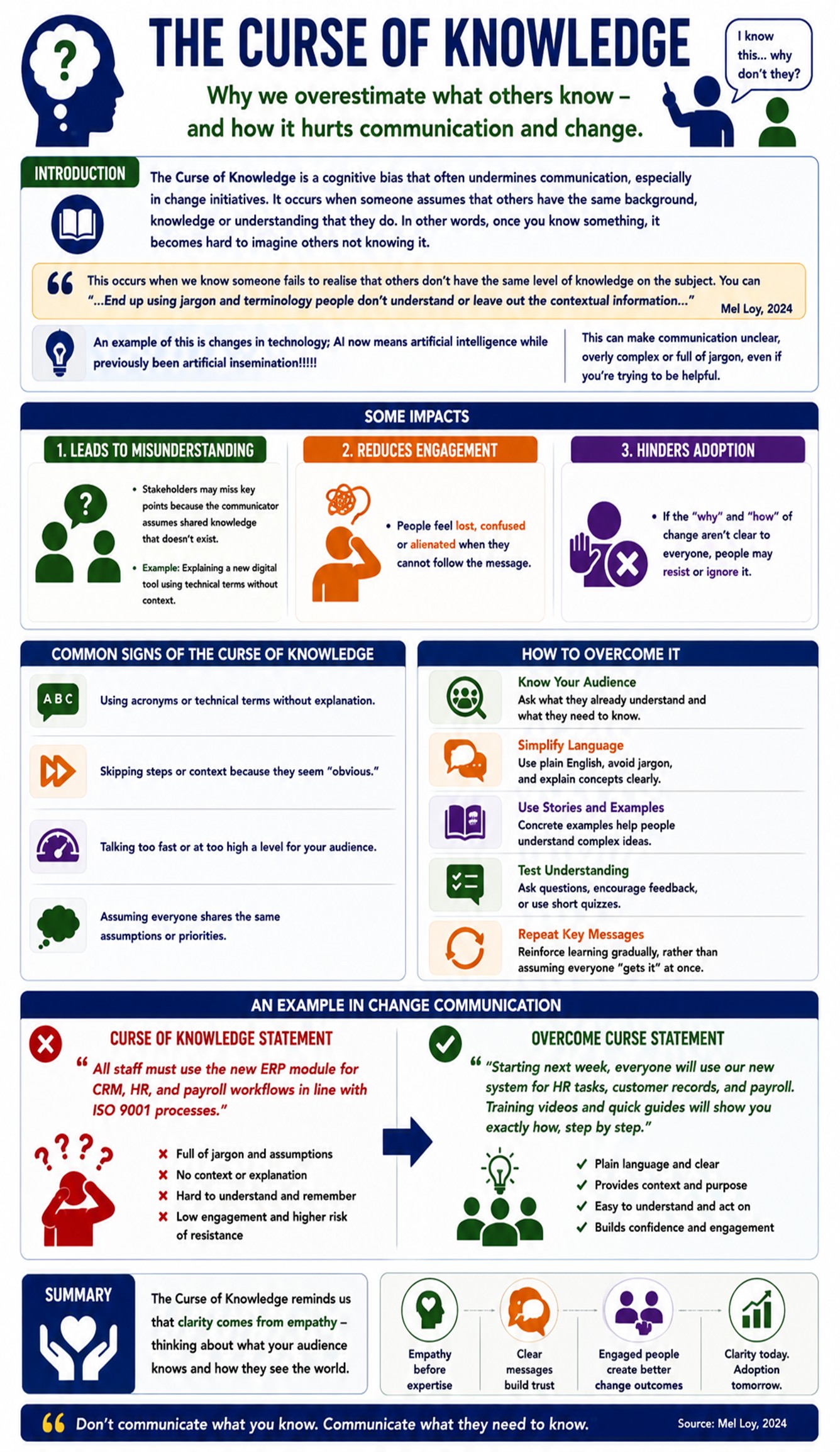
The Curse of Knowledge is a cognitive bias that often undermines communication, especially in change initiatives. It occurs when someone assumes that others have the same background, knowledge or understanding that they do. In other words, once you know something, it becomes hard to imagine others not knowing it.
This occurs when we know someone fails to realise that others don’t have the same level of knowledge on the subject. You can
“…End up using jargon and terminology people don’t understand or leave out the contextual information…”
Mel Loy, 2024
A related aspect of this concerns the recent predominance of technology; AI now means artificial intelligence while previously these 2 letters were usually understood to refer to artificial insemination!!!!!
This bias can make communication unclear, overly complex or full of jargon, even if you’re trying to be helpful.
Some Impacts
Leads to Misunderstanding
- stakeholders may miss key points because the communicator assumes shared knowledge that doesn’t exist.
- Example: Explaining a new digital tool using technical terms without context.
Reduces Engagement
- People feel lost, confused or alienated when they cannot follow the message.
Hinders Adoption
- If the “why” and “how” of change aren’t clear to everyone, people may resist or ignore it.
Some Common Signs of the Curse of Knowledge
- Using acronyms or technical terms without explanation.
- Skipping steps or context because they seem “obvious.”
- Talking too quickly or at too high a level for your audience.
- Assuming everyone shares the same assumptions or priorities.
How to Overcome It
Know Your Audience
- Ask what they already understand and what they need to know.
Simplify Language
- Use plain English, avoid jargon, and explain concepts clearly.
Use Stories and Examples
- Concrete examples help people understand complex ideas.
Test Understanding
- Ask questions, encourage feedback, or use short quizzes.
Repeat Key Messages
- Reinforce learning gradually, rather than assuming everyone “gets it” at once.
An Example in Change Communication
Curse of Knowledge Statement: “All staff must use the new ERP module for CRM, HR, and payroll workflows in line with ISO 9001 processes.”
Overcome Curse Statement: “Starting next week, everyone will use our new system for HR tasks, customer records, and payroll. Training videos and quick guides will show you exactly how, step by step.”
Summary
The Curse of Knowledge reminds us that clarity comes from empathy: thinking about what your audience knows and how they see the world.
(source: Mel Loy, 2024)