
The Dialogues That Drive Engagement
Introduction
The Dialogues That Drive Engagement refers to a structured approach to conversations that foster trust, participation and commitment within teams or organizations. Rather than being one-off discussions or top-down communications, these dialogues are intentional, inclusive and designed to create shared understanding and ownership of outcomes.
Key Elements
1. Purposeful Conversations
Engagement doesn’t happen by accident; the dialogue must have a clear why.
- Clarify intent – Why are we having this discussion? (inform, explore, decide, co-create, etc)
- Link to bigger picture – Show how this dialogue connects to team goals or organizational strategy.
2. Two-Way Flow (Not Just Telling)
People engage when they feel heard.
- Move from monologue to dialogue.
- Use open-ended questions (“What do you see as the biggest opportunities here?”) to invite diverse perspectives.
- Practise active listening, ie reflecting back what’s been said to confirm understanding.
3. Psychological Safety
Engagement requires a safe environment.
- Encourage candour — make it safe to share dissenting views without fear of punishment.
- Model curiosity, not judgment.
- Acknowledge contributions and show respect for different opinions.
4. Co-Creation & Shared Problem-Solving
Engaging dialogues shift from telling people what to do to building solutions together.
- Use collaborative methods like brainstorming, design thinking or appreciative inquiry.
- Involve stakeholders early, not just at the point of rollout.
5. Balanced Voice
Ensure no single person dominates.
- Use facilitation techniques (round robins, breakout groups, silent brainstorming) so everyone has a chance to contribute.
- Allow space for “quiet voices” — introverts, new members, or minority perspectives — to avoid groupthink.
6. Emotional Connection
Engagement is both rational and emotional.
- Share stories, metaphors or examples that connect with values.
- Recognize and name emotions in the room (excitement, fear, resistance, etc) to build empathy.
7. Action-Oriented Closure
An engaging dialogue ends with clarity on next steps.
- Summarize what’s been agreed and why.
- Define responsibilities, timelines, and how progress will be shared.
- Celebrate contributions to reinforce a sense of progress.
An Example
Imagine a leader introducing a new change initiative.
- Instead of presenting a slide deck and asking for questions at the end, they:
- Frame the purpose (“We need to rethink how we deliver services to meet growing demand”).
- Invite input (“What challenges do you see with our current process?”).
- Co-create solutions in small groups.
- Capture and agree on shared actions and commitments.
The result? People feel heard, invested and motivated to implement the change.
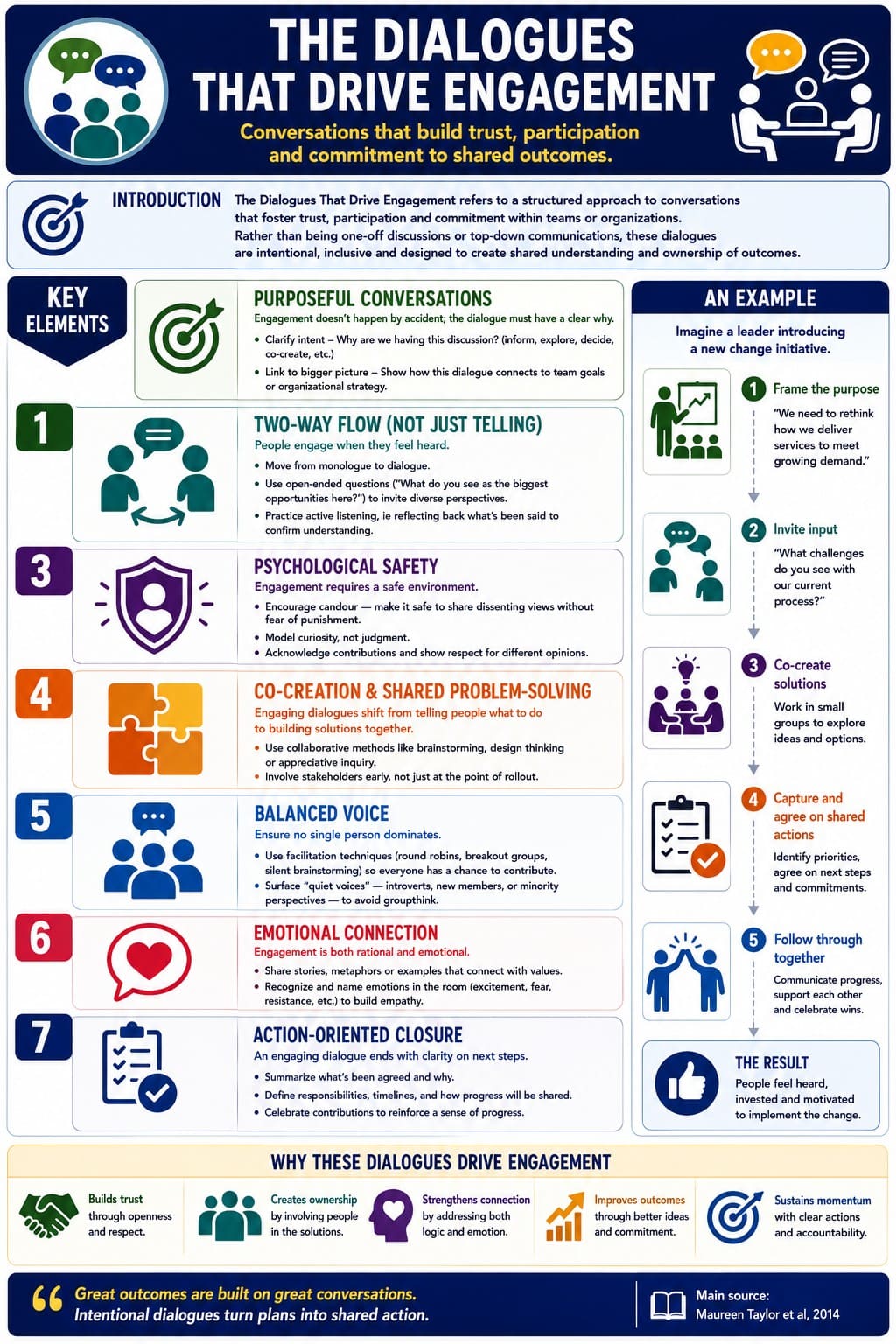
(main source: Maureen Taylor et al, 2014)