
Avatars in Change Management
Introduction
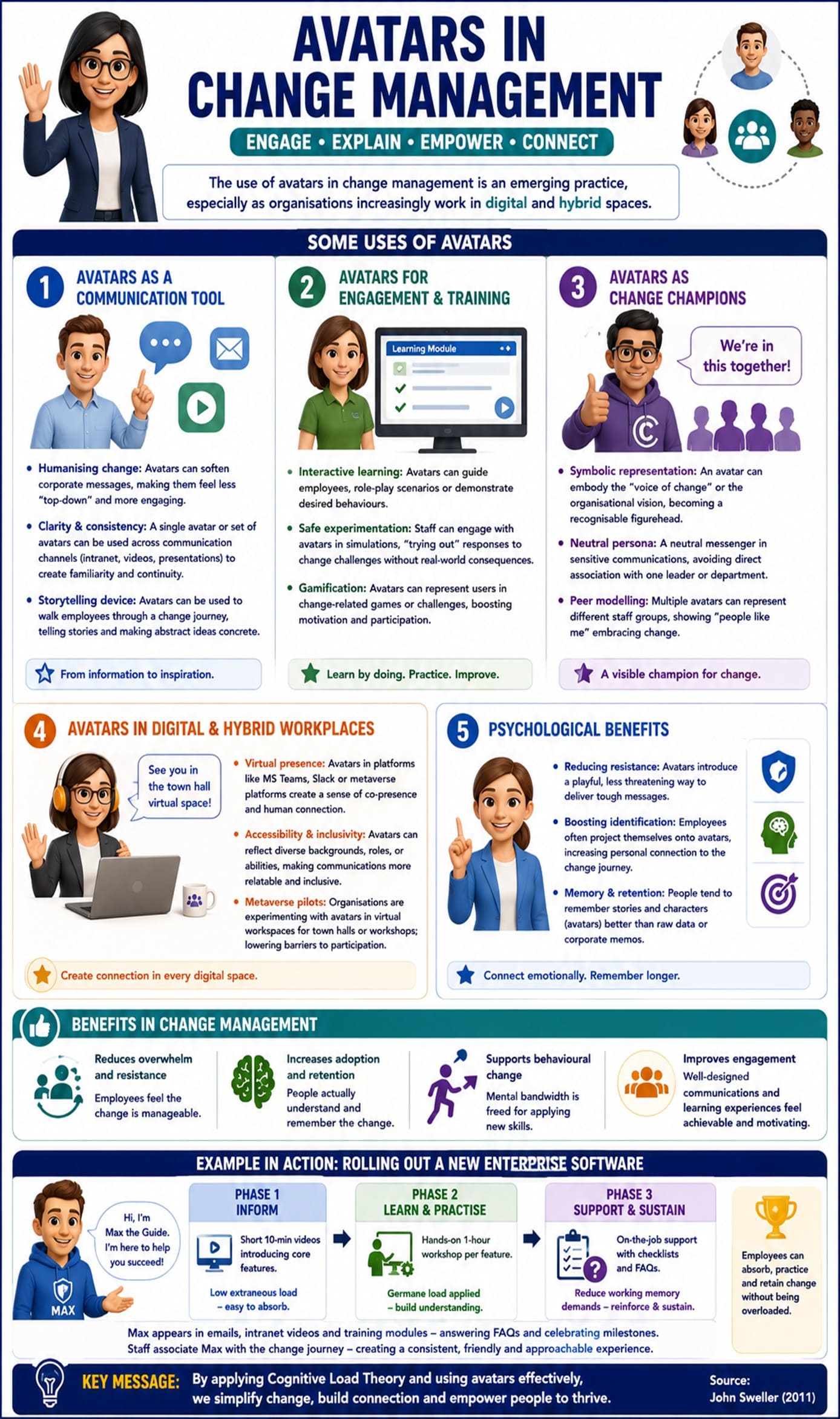
The use of avatars in change management is an emerging practice, especially as organisations increasingly work in digital and hybrid spaces.
Some Uses of Avatars
1. Avatars as a Communication Tool
- Humanising change: Avatars (digital representations, characters, or icons) can soften corporate messages, making them feel less “top-down” and more engaging.
- Clarity & consistency: A single avatar or set of avatars can be used across communication channels (intranet, videos, presentations) to create familiarity and continuity.
- Storytelling device: Avatars can be used to walk employees through a change journey, telling stories and making abstract ideas concrete.
2. Avatars for Engagement & Training
- Interactive learning: In e-learning modules or simulations, avatars can guide employees, role-play scenarios or demonstrate desired behaviours.
- Safe experimentation: Staff can engage with avatars in simulations, “trying out” responses to change challenges without real-world consequences.
- Gamification: Avatars can represent users in change-related games or challenges, boosting motivation and participation.
3. Avatars as Change Champions
- Symbolic representation: An avatar can embody the “voice of change” or the organisational vision, becoming a recognisable figurehead.
- Neutral persona: Sometimes, an avatar can act as a neutral messenger in sensitive communications, avoiding direct association with one leader or department.
- Peer modelling: Multiple avatars can represent different staff groups, showing “people like me” embracing change.
4. Avatars in Digital & Hybrid Workplaces
- Virtual presence: In remote environments, avatars (like in MS Teams, Slack, or metaverse platforms) can create a sense of co-presence and human connection.
- Accessibility & inclusivity: Avatars can reflect diverse backgrounds, roles, or abilities, making communications more relatable and inclusive.
- Metaverse pilots: Some organisations are experimenting with avatars in virtual workspaces, where employees attend town halls or workshops as avatars; lowering barriers to participation.
5. Psychological Benefits
- Reducing resistance: As change can be confronting, avatars introduce a playful, less threatening way to deliver tough messages.
- Boosting identification: Employees often project themselves onto avatars, increasing personal connection to the change journey.
- Memory & retention: People tend to remember stories and characters (avatars) better than raw data or corporate memos.
An Example:
A bank introducing a new IT system creates an avatar named Max the Guide. Max appears in emails, intranet videos, and training modules, showing employees how to use the system, answering FAQs, and celebrating milestones. Staff begin to associate Max with the change journey—creating a consistent, friendly, and approachable narrative.
(main source: Richard E. Mayer, 2001)