
More on Forgetting Curve
Introduction
The Forgetting Curve was developed by German psychologist Hermann Ebbinghaus in the late 19th century.
It illustrates how quickly information is forgotten over time if no effort is made to retain it. It's a foundational concept in learning and memory and has significant implications for change management.
Neuroscience tells us that the brain prefers to retain things that are important and disregard other information, especially if it is new. Repetition is a way of reinforcing the importance of the information and encouraging the brain to remember, ie it makes the connections in the brain stronger.
An important part of training is to follow-up to encourage reinforcement, repetition, retention, etc; this is often neglected.
The Forgetting Curve shows that:
- People forget about 50% of new information within an hour.
- Over 50% is lost within a day.
- 90% can be forgotten within a week (if there's no reinforcement.)
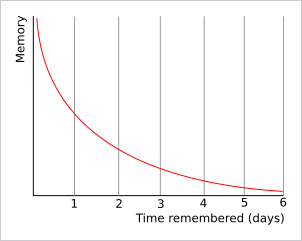
(source: Wikipedia, 2025a)
The curve is steepest just after learning, meaning the rate of forgetting is highest immediately after new information is presented.
However, repetition, active recall and spaced reinforcement can flatten the curve and improve retention over time.
Key Concepts
|
Term |
Meaning |
|
Decay of memory |
Natural decline of memory over time without reinforcement |
|
Spaced repetition |
Learning technique that reinforces material at increasing intervals |
|
Reinforcement |
Repeating or reviewing content to aid retention |
|
Active recall |
Practising retrieval to strengthen memory |
Application in Change Management
In change initiatives, forgetting is a major barrier to adoption and behavioural shift.
Simply delivering information once (eg in a training session or email) is not enough to sustain change.
Implications of the forgetting curve
- Initial Communication Isn’t Enough
- One-off change announcements or training sessions are rapidly forgotten.
- Employees forget key messages, reasons for the change or how to implement it.
- Need for Reinforcement
- Leaders must reiterate change messages repeatedly, especially at the start.
- Spaced reinforcement helps retain concepts like new processes, systems or behaviours.
- Multi-Modal Learning
- Use varied formats (eg, videos, workshops, job aids, peer learning, etc) to combat memory loss.
- Each mode acts as another layer of reinforcement.
- Leadership Messaging
- Regular, clear and consistent communication from leaders helps anchor change.
- Leaders should repeat key messages in town halls, team meeting, Face-to-Face (F2F), etc.
- Follow-Up and Support
- Coaching, mentoring, feedback and Q&A sessions reinforce new behaviours.
- Provide "nudges" or reminders at critical moments (eg before using a new system).
- Learning Design for Change
- Design learning journeys that spread training over time instead within a single session.
- Use microlearning, just-in-time learning and knowledge refreshers.
Some Practical Tips for Change Managers
|
Strategy |
Why It Works |
|
Send follow-up messages/emails |
Reinforces key messages and prevents early drop-off |
|
Create a reinforcement schedule |
Builds habits and strengthens memory |
|
Use informal leaders |
They can help repeat and normalize new practices |
|
Track engagement and retention |
Identify where memory loss or confusion occurs |
|
Design layered learning |
Spread training and engagement over time |
Summary
The Forgetting Curve warns us that without reinforcement, people quickly forget. In change management, this means a single email, meeting, or training is not enough. Change leaders must design, sustain, repeated and reinforce interventions to make change stick, ie ‘use it or lose it’
(main source: Benjamin Campbell et al, 2025)